

Welcome to Pet Viewpoint
Comment/Question?
Please contact Copywriter Tricia Perry
If you have not subscribed —
Get Pet Viewpoint content delivered directly to your inbox weekly so you do not miss out on great recommended USA-made pet products and services and good researched articles on pet care for your pet birds, cats, dogs, and aquarium critters. You will find how to’s, lessons on pets, training tips, fun stories, and more.
So you can pick the most relative to your interests, all posts are categorized by subject on my Welcome page in the menu (listed below my 5 latest posts).

DON’T MISS OUT!
FREE Subscribe
Type your Email>>>
********************
Feline Dementia information was requested by one of my good readers. A very interesting topic. A definitive description was noted in Vet Record: ”Cognitive dysfunction syndrome (CDS) describes the age-related decline in cognitive abilities, characterised by certain behavioral changes that cannot be attributed to any other medical condition.”
I found answers from WebMD, TuftsCatnip.com, and ASPCA Pet Health Insurance. They all agree on the signs of dementia in cats and that you can slow its progression with good care and activity. They also comment on the importance of taking your kitty to the vet to rule out any other possible illness, ie, arthritis, urinary tract disease, pain causes, etc.
WebMD and Tufts Catnip both report statistics on Feline Dementia.
WebMD reports that CDS (cognitive dysfunction syndrome) is becoming more common with 36 percent of cats between the ages of 11 and 21 being affected with CDS and 50 percent of cats over the age of 15 showing changes that are linked to this disease. That is quite a number and more than I would have guessed.
Tufts Catnip.com says that 55 percent of cats between the ages of 11 to 15 and 80 percent of cats aged 16 to 20 show signs of CDS.
ASPCA Pet Health Insurance claims that, depending on your kitty’s age when diagnosed, they can live five to ten years with CDS. They continue on to suggest good care and no routine changes, but possibly more beds, and more litter boxes. They also caution not to leave your feline alone for any extended period of time.

Symptoms of CDS
- Lack of interest in playing
- Spatial disorientation
- Wandering away from home
- Disorientation or confusion
- Loss of interest in food and water, or change in appetite
- Changes in sleep patterns or sleeping too much
- Going to the bathroom outside of the litter box
- Long periods of meowing or vocalizing for seemingly no reason, especially at night
- Staring into space or at the walls for long stretches of time
These experts also mention that your fur baby may lose interest even in grooming themselves. In that case, time for you to take over.
Your kitty may have a hard time recognizing you or other familiar people.
Treatments for CDS
There evidently is no specific cure for cat dementia. However they do mention a couple of possible helpful medications.
WebMD asserts that your vet may prescribe anipryl, a med to increase dopamine levels in the brain and help with memory loss or possibly an anti-anxiety medication. TuftsCatnip suggests asking your vet about selegiline hydrochloride which has been approved for use on dogs and has been reported to help some issues in cats.
Care
The main remedy expressed by all three organizations is to care for your kitty by not changing the placement of their food or water or bed or litter box…or their normal surroundings. You may even use additional litter boxes near their main box and give them more spots with blankets.
Extra attention may be in order for reassurance with belly rubs or pets.
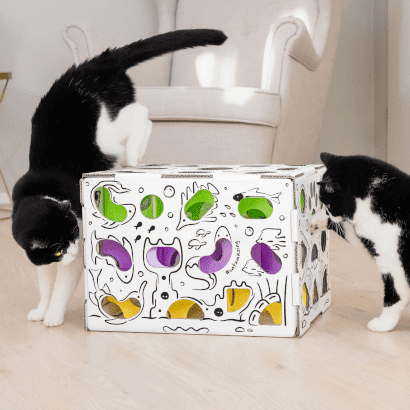
Mental stimulation is a great tool to slow the progression of CDS. There are plenty of laser toys, feather toys, treat puzzles, and more to help in this regard.
Tufts Catnip does also suggest using kitty foods containing more antioxidants and omega 3s.
In that regard, mackeral, salmon, and trout are high in omega 3 fatty acids for your kitty cat along with cod and haddock for antioxidants. See more info on good foods in All Natural Pet Care.
I hope the above gives you a good start of information on feline dementia. Do take the strong suggestion of other possibilities to heart and see your veterinarian before coming to any conclusions about your fur bud.
Pet Food Recalls
Remember to check with our FDA.gov on pet food recalls. They continue to occur.
Funny Animal Videos
First up from Big Geek Daddy is about cats and the dinner bell.
Second in line an obstacle challenge with cats and dogs.
And last we have cats stealing the dog’s bed.
Thanks

Please remember to let your pet-loving family members and friends know about Pet Viewpoint and continue to check out our posts every week. Your comments and post subject suggestions are most welcome. Leave your notes down below on the left or on our Contact page in the menu.
Tricia, thank you so much for the information on dementia in cats. I’m a little concerned about two of my elder cats so I will watch out for the symptoms you mentioned and follow the recommendations. It’s so nice to find all of this information in one place.
I was happy to receive your subject suggestion, Katrob. Wishing the best for your fur babies.